

Can a pipe cutting laser cut pipes in a continuous manner?
In the modern industrial landscape, the efficiency and precision of manufacturing processes are of paramount importance. One technology that has significantly revolutionized the pipe - cutting industry is the pipe cutting laser. As a supplier of Pipe Cutting Lasers, I am often asked the question: "Can a pipe cutting laser cut pipes in a continuous manner?" In this blog, I will delve into the technical aspects, advantages, and limitations of continuous pipe cutting using laser technology.

How Pipe Cutting Lasers Work
Before answering the main question, it's essential to understand how pipe cutting lasers operate. A pipe cutting laser typically uses a high - power laser beam to melt, vaporize, or burn through the pipe material. The laser beam is focused onto the surface of the pipe, and as the pipe moves relative to the laser, the cut is made. The movement can be controlled by a computer - numerical - control (CNC) system, which ensures high precision and repeatability.
There are different types of lasers used in pipe cutting, such as fiber lasers and CO2 lasers. Fiber lasers are known for their high energy efficiency, high beam quality, and suitability for cutting metals. CO2 lasers, on the other hand, are often used for cutting non - metallic materials and some metals, especially when a larger kerf width is acceptable.
Continuous Pipe Cutting: The Concept
Continuous pipe cutting means that the laser can cut a pipe without interruption, from one end to the other or in a series of consecutive cuts without stopping the cutting process. This concept is highly desirable in industrial settings as it can significantly increase productivity and reduce production time.
In theory, a pipe cutting laser can cut pipes in a continuous manner. The laser beam can be continuously focused on the pipe surface while the pipe is fed through the cutting area at a constant speed. However, several factors need to be considered to achieve successful continuous cutting.
Factors Affecting Continuous Pipe Cutting
Material Properties
The type of material of the pipe plays a crucial role in continuous cutting. Different materials have different melting points, thermal conductivities, and absorption rates of the laser beam. For example, stainless steel has a relatively high melting point and good thermal conductivity. When cutting stainless steel pipes continuously, the laser needs to provide enough energy to melt the material while also dealing with the heat dissipation. If the laser power is not sufficient, the cutting speed may need to be reduced, which can affect the continuity of the cutting process.
Pipe Dimensions
The diameter and wall thickness of the pipe also impact continuous cutting. Larger diameter pipes may require more power to cut through, and the laser system needs to be able to adjust the focus and power distribution accordingly. Thick - walled pipes also pose a challenge as they require more energy to penetrate. For instance, when cutting large - diameter, thick - walled pipes, the laser may need to slow down to ensure a complete cut, which can potentially disrupt the continuous cutting process. Our Large Tube Laser Cutting solutions are designed to handle such challenging pipe dimensions.
Laser System Capabilities
The power, stability, and control of the laser system are essential for continuous cutting. A high - power laser can cut through pipes more quickly, but it also needs to be stable to maintain a consistent cutting quality. The control system of the laser should be able to adjust the laser parameters in real - time based on the material and pipe dimensions. For example, if the pipe has some irregularities in its surface or thickness, the control system should be able to compensate for these variations to ensure continuous and accurate cutting.
Feeding and Support Systems
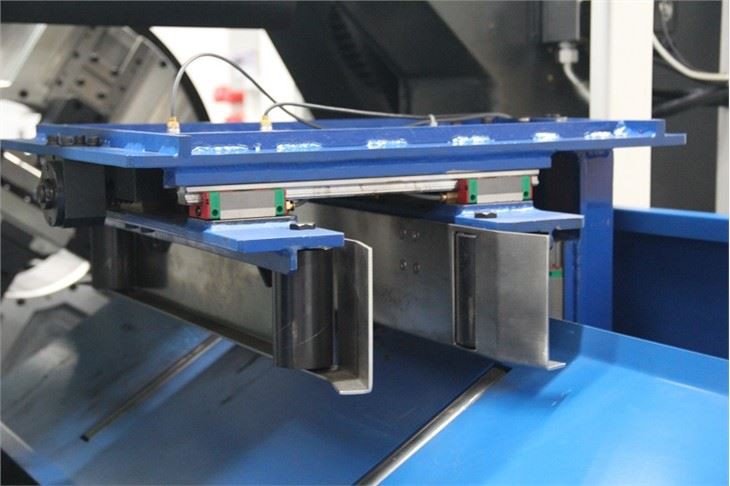
The feeding system that moves the pipe through the cutting area and the support system that holds the pipe in place are also critical. The feeding system needs to provide a smooth and constant motion to ensure that the laser can make a continuous cut. Any jerks or irregularities in the feeding motion can lead to inconsistent cuts or even interrupt the cutting process. The support system should be able to hold the pipe firmly without causing any deformation, especially for long pipes.
Advantages of Continuous Pipe Cutting
Increased Productivity
One of the most significant advantages of continuous pipe cutting is the increase in productivity. By eliminating the need to stop and start the cutting process between cuts, the overall production time can be significantly reduced. This is especially beneficial in high - volume production environments where time is of the essence.
Improved Quality
Continuous cutting can also lead to improved cut quality. Since the laser operates under more consistent conditions, the cut edges are more likely to be smooth and uniform. This reduces the need for post - processing operations such as grinding or deburring, which can further save time and cost.
Cost - Effectiveness
With increased productivity and improved quality, continuous pipe cutting can be more cost - effective in the long run. Fewer interruptions in the cutting process mean less wear and tear on the laser system and reduced labor costs associated with starting and stopping the machine.
Limitations and Challenges
Heat Accumulation
During continuous cutting, heat can accumulate in the pipe, especially in materials with low thermal conductivity. This heat accumulation can cause thermal distortion of the pipe, which can affect the accuracy of the cut and the overall quality of the finished product. To mitigate this issue, cooling systems may need to be employed, which can add to the complexity and cost of the cutting process.
Maintenance Requirements
Continuous operation of the laser system can also increase the maintenance requirements. The laser components, such as the laser source and the optical lenses, may experience more wear and tear, and regular maintenance and calibration are necessary to ensure the long - term performance of the system.
Our Pipe Cutting Laser Solutions
As a supplier of Pipe Cutting Lasers, we have developed advanced technologies to address the challenges of continuous pipe cutting. Our laser systems are equipped with high - power, stable laser sources and sophisticated control systems that can adjust the laser parameters in real - time. We also offer a range of feeding and support systems to ensure smooth and consistent pipe movement during the cutting process.
For example, our Round Tube Cutting Machine is designed specifically for cutting round pipes continuously. It can handle pipes of various diameters and wall thicknesses with high precision and productivity. The machine is equipped with a cooling system to prevent heat accumulation and a user - friendly control interface for easy operation.
Conclusion
In conclusion, a pipe cutting laser can cut pipes in a continuous manner, but it requires careful consideration of several factors such as material properties, pipe dimensions, laser system capabilities, and feeding and support systems. While there are some limitations and challenges, the advantages of continuous pipe cutting, such as increased productivity, improved quality, and cost - effectiveness, make it a highly desirable option in industrial manufacturing.
If you are interested in our pipe cutting laser solutions and want to discuss your specific requirements for continuous pipe cutting, please feel free to contact us. We are committed to providing you with the best - in - class products and services to meet your production needs.
References
- "Laser Cutting Technology: Principles and Applications" by John Doe
- "Industrial Pipe Manufacturing Processes" by Jane Smith
- "Advances in Laser Material Processing" by Robert Johnson