

How accurate is large tube laser cutting?
In the realm of modern manufacturing, large tube laser cutting has emerged as a pivotal technology, offering precision and efficiency in fabricating various components. As a supplier of Large Tube Laser Cutting, I've witnessed firsthand the transformative impact of this technology on industries such as automotive, aerospace, and construction. In this blog, I'll delve into the accuracy of large tube laser cutting, exploring the factors that influence it and how we ensure high - precision results in our operations.
Understanding the Basics of Large Tube Laser Cutting
Large tube laser cutting is a process that utilizes a high - powered laser beam to cut through large - diameter tubes. The laser beam is focused on the surface of the tube, melting or vaporizing the material along the cutting path. This method offers several advantages over traditional cutting techniques, such as sawing or plasma cutting. Laser cutting provides a cleaner cut, with minimal heat - affected zones and less material distortion.
One of the key attractions of large tube laser cutting is its potential for high accuracy. Accuracy in this context refers to the ability to cut the tube according to the specified dimensions and geometries with a high degree of precision. This is crucial for industries where components need to fit together perfectly, such as in the assembly of complex machinery or structures.
Factors Affecting the Accuracy of Large Tube Laser Cutting
Laser Beam Quality
The quality of the laser beam is a fundamental factor in determining the accuracy of the cutting process. A high - quality laser beam has a small spot size and a high energy density. A smaller spot size allows for more precise cuts, as it can focus on a smaller area of the tube. This is especially important when cutting intricate shapes or fine details. The energy density of the beam affects the cutting speed and the quality of the cut edge. If the energy density is too low, the cutting process may be slow, and the edges may be rough. On the other hand, if it is too high, it can cause excessive melting and damage to the tube.
Tube Material and Thickness
The type of material and its thickness also play a significant role in the accuracy of laser cutting. Different materials have different absorption rates of the laser beam. For example, metals like steel and aluminum have different optical properties, which means that the laser cutting parameters need to be adjusted accordingly. Thicker tubes generally require more energy to cut through, and this can pose challenges in maintaining accuracy. As the laser penetrates deeper into the material, there may be more heat dissipation and a greater chance of distortion.
Machine Stability and Precision
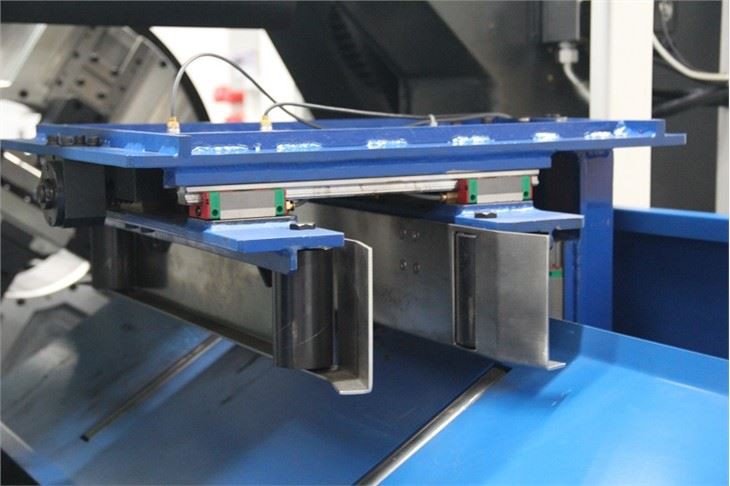
The stability and precision of the laser cutting machine are essential for accurate cutting. The machine must be able to hold the tube firmly in place during the cutting process to prevent any movement or vibration. Any movement can cause the cut to deviate from the intended path, resulting in inaccurate dimensions. Additionally, the mechanical components of the machine, such as the linear guides and the drive systems, need to be highly precise. Even small errors in the movement of these components can accumulate over time and lead to significant inaccuracies in the final cut.
Cutting Speed and Feed Rate
The cutting speed and feed rate are two important parameters that need to be carefully balanced. The cutting speed refers to how fast the laser moves along the tube, while the feed rate is the speed at which the tube is fed into the cutting area. If the cutting speed is too fast, the laser may not have enough time to fully penetrate the material, resulting in incomplete cuts or rough edges. Conversely, if the speed is too slow, it can cause excessive heat buildup and damage to the tube. The feed rate also needs to be synchronized with the cutting speed to ensure a smooth and accurate cutting process.

Ensuring High Accuracy in Our Large Tube Laser Cutting Services
As a supplier of large tube laser cutting, we take several measures to ensure high accuracy in our operations.
Advanced Laser Technology
We invest in state - of - the - art laser cutting machines that are equipped with the latest laser technology. These machines are capable of producing high - quality laser beams with small spot sizes and adjustable energy densities. This allows us to optimize the cutting process for different materials and thicknesses, ensuring precise cuts every time.
Material Testing and Parameter Optimization
Before starting a large - scale cutting project, we conduct thorough material testing. We analyze the optical and thermal properties of the tube material to determine the most suitable laser cutting parameters. This includes adjusting the laser power, cutting speed, and feed rate. By optimizing these parameters, we can minimize the effects of material variability and ensure consistent accuracy across different batches of tubes.
Rigorous Quality Control
We have a comprehensive quality control system in place to monitor the accuracy of our cuts. This includes using advanced measuring tools, such as coordinate measuring machines (CMMs), to check the dimensions of the cut tubes. We compare the measured dimensions with the specified design requirements to ensure that they meet the strictest tolerances. Any deviations are immediately addressed, and the cutting parameters are adjusted if necessary.
Applications of High - Accuracy Large Tube Laser Cutting
The high accuracy of large tube laser cutting makes it suitable for a wide range of applications.
Automotive Industry
In the automotive industry, large tube laser cutting is used to manufacture components such as exhaust systems, chassis parts, and suspension components. These components need to be precisely cut to ensure a perfect fit and optimal performance. The ability to cut complex shapes and profiles accurately allows automotive manufacturers to design more efficient and lightweight vehicles.
Aerospace Industry
The aerospace industry has extremely high requirements for precision and quality. Large tube laser cutting is used to fabricate components for aircraft structures, such as wing spars and fuselage frames. The high accuracy of the cutting process ensures that these components meet the strict safety and performance standards of the aerospace industry.
Construction Industry
In the construction industry, large tube laser cutting is used to create structural components for buildings and bridges. Accurate cuts are essential for ensuring the stability and integrity of these structures. The ability to cut tubes with high precision allows for more efficient assembly and reduces the need for on - site adjustments.
Our Product Offerings
We offer a range of large tube laser cutting solutions, including the 6m Tube Laser Cutting Machine and the Tube Laser Cutting Machine 2000w. These machines are designed to handle large - diameter tubes with high accuracy and efficiency. Our team of experienced technicians can provide customized solutions based on your specific requirements.
Conclusion
Large tube laser cutting offers a high level of accuracy, but achieving this requires careful consideration of various factors such as laser beam quality, tube material and thickness, machine stability, and cutting parameters. As a supplier, we are committed to leveraging the latest technology and implementing strict quality control measures to ensure that our customers receive precisely cut tubes that meet their exact specifications.
If you are in need of high - accuracy large tube laser cutting services or are interested in our product offerings, we invite you to reach out to us for a detailed discussion. Our team is ready to assist you in finding the best solutions for your manufacturing needs.
References
- Smith, J. (2018). Laser Cutting Technology: Principles and Applications. Springer.
- Johnson, A. (2019). Precision Manufacturing with Laser Cutting. Journal of Manufacturing Science and Technology.
- Brown, R. (2020). Advances in Large Tube Laser Cutting. International Journal of Machine Tools and Manufacture.