

How does the cutting angle affect mild steel laser cutting?
In the field of mild steel processing, laser cutting has emerged as a revolutionary technique, offering high precision, efficiency, and flexibility. As a dedicated mild steel laser cutting supplier, I've witnessed firsthand how the cutting angle can significantly influence the outcome of the laser - cutting process. In this blog, I'll delve into the scientific aspects of how the cutting angle affects mild steel laser cutting and share insights based on our practical experiences.
Basic Principles of Mild Steel Laser Cutting
Before we explore the impact of the cutting angle, it's essential to understand the fundamentals of mild steel laser cutting. Laser cutting uses a high - energy laser beam to melt, vaporize, or burn through the mild steel material. The laser beam is focused onto the surface of the mild steel, creating a narrow, intense heat source. As the beam moves along the cutting path, it severs the material, leaving a clean and precise cut.
The quality of the cut is determined by several factors, including the laser power, cutting speed, assist gas pressure, and the cutting angle. Each of these factors interacts with one another, and the cutting angle can have a profound impact on the overall cutting process.

Influence of Cutting Angle on Kerf Width
One of the most noticeable effects of the cutting angle is on the kerf width. The kerf is the width of the material that is removed during the cutting process. When the laser beam is perpendicular to the surface of the mild steel (a cutting angle of 90 degrees), the kerf width is typically at its narrowest. This is because the laser energy is concentrated directly on the cutting path, minimizing the amount of material that is melted and removed.
However, as the cutting angle deviates from 90 degrees, the kerf width tends to increase. When the laser beam is at an angle, the energy is distributed over a larger area of the material surface. This causes more material to be melted and vaporized, resulting in a wider kerf. A wider kerf can be a disadvantage in applications where precision is crucial, as it can lead to dimensional inaccuracies in the final product.
For our customers who require high - precision cuts, such as those in the electronics or aerospace industries, maintaining a 90 - degree cutting angle is often preferred. Our Sheet Metal Fiber Laser Cutting Machine is designed to provide precise perpendicular cuts, ensuring minimal kerf width and high - quality results.
Impact on Cutting Speed
The cutting angle also has a significant impact on the cutting speed. When cutting at a 90 - degree angle, the laser beam can penetrate the mild steel more efficiently, allowing for faster cutting speeds. This is because the energy is applied directly to the material, and the molten metal can be easily blown away by the assist gas.
As the cutting angle decreases, the cutting speed generally slows down. At non - perpendicular angles, the laser beam has to travel a longer path through the material, and the molten metal may not be removed as effectively. This can lead to a buildup of molten material, which can impede the cutting process and reduce the cutting speed.
In some cases, our customers who need to cut at non - perpendicular angles, such as for bevel cuts, may need to adjust the cutting speed accordingly. Our Thin Thickness Laser Cutter and Thick Thickness Laser Cutter are equipped with advanced control systems that allow for precise adjustment of the cutting speed based on the cutting angle.
Effects on Edge Quality
Edge quality is another critical aspect affected by the cutting angle. A perpendicular cut (90 degrees) usually results in a smooth, clean edge with minimal burrs and dross. The laser energy is evenly distributed across the cutting path, and the assist gas can effectively remove the molten metal, leaving a high - quality edge.
When cutting at an angle, the edge quality can be compromised. At non - perpendicular angles, the laser beam may not remove the molten metal as uniformly, leading to uneven edges, burrs, and dross formation. This is especially true for thicker mild steel materials, where the uneven distribution of energy and molten metal removal can be more pronounced.
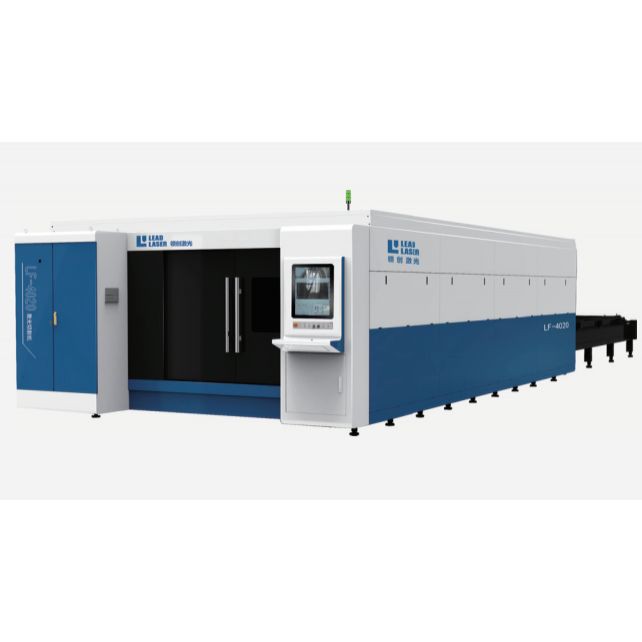
To improve the edge quality when cutting at non - perpendicular angles, we recommend using appropriate assist gases and adjusting the laser parameters. For example, increasing the assist gas pressure can help to blow away the molten metal more effectively, reducing the formation of burrs and dross.

Heat - Affected Zone (HAZ) and Cutting Angle
The heat - affected zone (HAZ) is the area of the mild steel material that has been affected by the heat of the laser cutting process. A smaller HAZ is generally desirable, as it minimizes the changes in the material's properties, such as hardness and ductility.
When cutting at a 90 - degree angle, the HAZ is typically smaller because the laser energy is concentrated directly on the cutting path. As the cutting angle deviates from 90 degrees, the HAZ tends to increase. This is because the laser energy is spread over a larger area of the material surface, causing more heat to be transferred to the surrounding material.
A larger HAZ can have negative effects on the mechanical properties of the mild steel. For example, it can lead to increased hardness and reduced ductility in the affected area, which may affect the performance of the final product. To minimize the HAZ when cutting at non - perpendicular angles, we can adjust the laser power and cutting speed to optimize the energy input.
Practical Considerations for Different Cutting Angles
In practical applications, different cutting angles may be required depending on the design and function of the final product. For example, bevel cuts are often used in welding applications to provide a better joint fit. When making bevel cuts, it's important to carefully consider the impact of the cutting angle on the kerf width, cutting speed, edge quality, and HAZ.
For thinner mild steel materials, it may be possible to achieve acceptable results at a wider range of cutting angles. However, for thicker materials, the effects of the cutting angle are more pronounced, and more precise control is required. Our team of experts can provide guidance on the optimal cutting parameters for different cutting angles and material thicknesses.
Conclusion
As a mild steel laser cutting supplier, we understand the importance of the cutting angle in the laser - cutting process. The cutting angle can significantly affect the kerf width, cutting speed, edge quality, and heat - affected zone, all of which are crucial factors in determining the quality of the final product.
Whether you need a precise perpendicular cut or a bevel cut at a specific angle, our range of Sheet Metal Fiber Laser Cutting Machine, Thin Thickness Laser Cutter, and Thick Thickness Laser Cutter can meet your needs. Our experienced team is ready to assist you in optimizing the cutting process to achieve the best results.
If you're interested in our mild steel laser cutting services or products, we encourage you to contact us for a detailed discussion. We're committed to providing high - quality solutions tailored to your specific requirements.
References
- "Laser Cutting: Theory and Practice" by John Ion
- "Modern Laser Materials Processing" by Christiane Otto and Karl - Peter Weber
- "Industrial Laser Applications" by Richard Fabbro and Patrick Peyre