

How to measure the cutting accuracy of a 2kw laser cutting machine?
As a supplier of 2kw Laser Cutting Machines, I understand the critical importance of cutting accuracy in the manufacturing and fabrication industries. Precision is not just a buzzword; it's the backbone of high-quality production. In this blog post, I'll delve into the various methods to measure the cutting accuracy of a 2kw laser cutting machine, providing you with a comprehensive guide to ensure your equipment is performing at its best.
Understanding the Basics of Cutting Accuracy
Cutting accuracy refers to the degree to which the actual cutting results match the intended design specifications. In the context of a 2kw laser cutting machine, it encompasses several aspects, including dimensional accuracy, straightness, and perpendicularity. When these factors are precisely measured and controlled, the machine can produce parts with consistent quality, reducing waste and rework.
Factors Affecting Cutting Accuracy
Before we discuss the measurement methods, it's essential to understand the factors that can influence cutting accuracy. These include:
- Laser Beam Quality: A high-quality laser beam with a small spot size and low divergence is crucial for achieving precise cuts. Any irregularities in the beam can lead to uneven cutting and dimensional errors.
- Machine Stability: The stability of the laser cutting machine, including its frame, motion control system, and worktable, affects the accuracy of the cuts. Vibrations or misalignments can cause deviations from the intended cutting path.
- Material Properties: Different materials have varying physical and chemical properties, such as hardness, thickness, and reflectivity, which can impact the cutting process. For example, thicker materials may require more power and slower cutting speeds to ensure accurate cuts.
- Cutting Parameters: The selection of cutting parameters, such as power, speed, and gas pressure, plays a significant role in determining the cutting accuracy. Incorrect parameter settings can result in over - cutting, under - cutting, or poor edge quality.
Measuring Dimensional Accuracy
Dimensional accuracy is one of the most important aspects of cutting accuracy. It refers to how closely the dimensions of the cut parts match the design specifications.
1. Using Precision Measuring Tools
- **Calipers**: Vernier calipers and digital calipers are commonly used to measure the linear dimensions of the cut parts, such as length, width, and thickness. They can provide measurements with an accuracy of up to 0.01 mm, depending on the type of caliper.
- **Micrometers**: Micrometers offer even higher precision than calipers and are suitable for measuring small dimensions, such as the diameter of a hole or the thickness of a thin sheet. They can measure to an accuracy of 0.001 mm or better.
- **Coordinate Measuring Machines (CMMs)**: CMMs are advanced measuring devices that use a probe to measure the coordinates of points on the surface of a part. They can provide highly accurate 3D measurements of complex geometries and are often used in quality control laboratories.
2. Comparing with Reference Parts
Another method to measure dimensional accuracy is to compare the cut parts with reference parts that have been precisely manufactured to the design specifications. This can be done visually or using measuring tools. Any differences between the two parts indicate errors in the cutting process.
Testing Straightness and Perpendicularity
Straightness and perpendicularity are crucial for ensuring that the cut parts fit together correctly and function as intended.
1. Using Straightedges and Squares
- **Straightedges**: A straightedge is a flat, straight bar that can be used to check the straightness of the cut edges. By placing the straightedge along the edge of the cut part, any deviations from a straight line can be easily detected.
- **Squares**: Squares are used to check the perpendicularity between two edges or surfaces. A right - angled square can be placed against the edges of the cut part to determine if the angle between them is 90 degrees.
2. Optical Measuring Devices
Optical measuring devices, such as laser alignment systems and autocollimators, can provide more accurate measurements of straightness and perpendicularity. These devices use laser beams or optical principles to detect and quantify any deviations from the desired straight or perpendicular angles.
Assessing Edge Quality
The quality of the cut edges also reflects the cutting accuracy of the laser cutting machine. A good - quality cut edge should be smooth, free of burrs, and have a consistent width.
1. Visual Inspection
Visual inspection is the simplest way to assess edge quality. By examining the cut edges under a microscope or with the naked eye, you can identify any defects, such as burrs, dross, or rough surfaces.
2. Surface Roughness Measurement
Surface roughness is a quantitative measure of the irregularities on the cut edge surface. It can be measured using a surface roughness tester, which provides a numerical value representing the average height of the surface irregularities. A lower surface roughness value indicates a smoother cut edge.
Importance of Regular Calibration
Regular calibration of the 2kw laser cutting machine is essential to maintain cutting accuracy. Calibration involves adjusting the machine's settings and components to ensure that it operates within the specified accuracy limits. This should be done at regular intervals, as recommended by the manufacturer, or whenever there are signs of decreased accuracy, such as inconsistent cut quality or dimensional errors.
How Our 2kw Laser Cutting Machine Ensures Accuracy
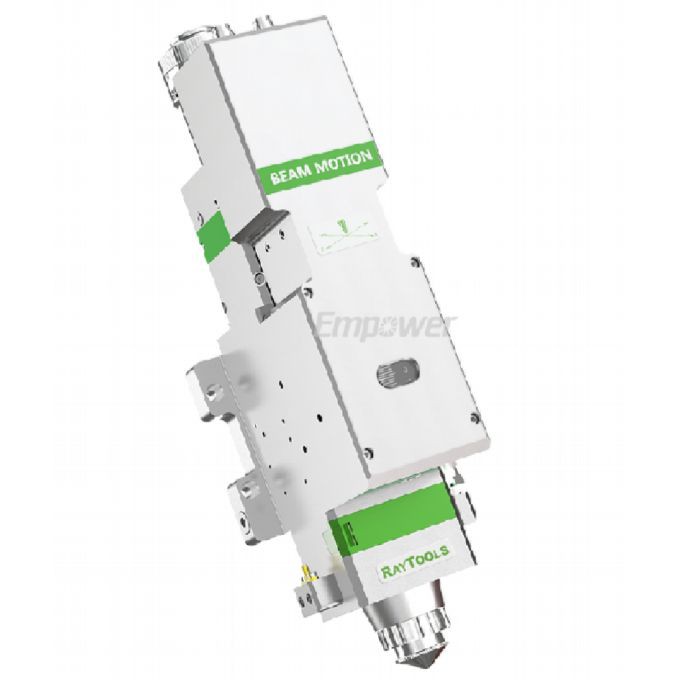
Our 2kw Laser Cutting Machine is designed with advanced technology and high - quality components to ensure optimal cutting accuracy. We use high - precision linear guides and ball screws for smooth and accurate motion control, and our laser sources are carefully calibrated to provide a stable and focused laser beam. Additionally, our machine is equipped with intelligent control systems that can automatically adjust the cutting parameters based on the material properties and design requirements, further enhancing the cutting accuracy.
Comparison with Higher - Power Machines
While our 2kw laser cutting machine offers excellent cutting accuracy, you may be wondering how it compares to higher - power machines such as the 3kw Fiber Sheet Laser and 4kw Laser Cutter. Higher - power machines can cut through thicker materials more quickly, but cutting accuracy is not solely determined by power. Our 2kw machine is optimized for precision cutting, especially for thinner materials, and can achieve comparable accuracy in many applications.
Contact Us for More Information
If you're in the market for a high - precision 2kw laser cutting machine or have any questions about measuring cutting accuracy, we'd love to hear from you. Our team of experts is ready to assist you in selecting the right machine for your specific needs and providing you with in - depth technical support. Contact us to start a conversation about your procurement requirements and take your manufacturing operations to the next level.

References
- Dornfeld, D. A., Min, S., & Stephenson, D. A. (2006). Manufacturing processes and materials. Pearson Prentice Hall.
- Kalpakjian, S., & Schmid, S. R. (2013). Manufacturing engineering and technology. Pearson.
- Wulfsberg, G. (2000). Laser cutting handbook. Laser Institute of America.